Oliver and Barbara’s marital estrangement
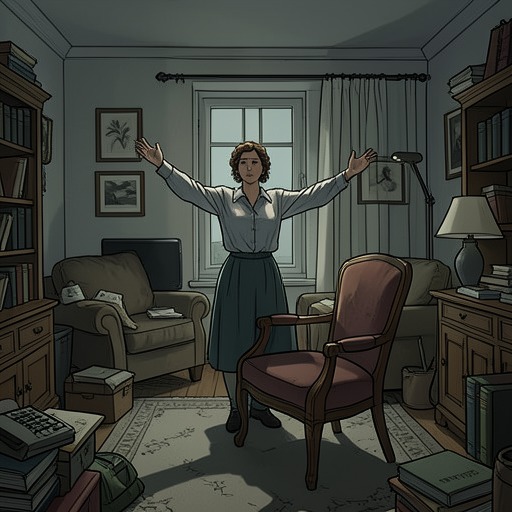
The War of the RosesOliver and Barbara’s marital estrangement is the emotional rupture at the center of the Roses’ household: a separation announced as Barbara’s bid for independence that gradually makes even ordinary family life feel unrecognizable. Its effects extend beyond the marriage. Eve and Josh struggle to understand what their parents’ break means, while Ann is drawn into the family’s silences and fears. At the crisis in the house, Oliver and Barbara briefly recover a common purpose in trying to protect their children, but the moment does not erase the estrangement that brought them there.
The announcement and its meaning
Ann first encounters the news through Eve, who tells her that her parents have decided to go their separate ways. Though Ann already knows what has happened, its reality has not fully sunk in; she has continued to deny it to herself and now feels the force of her guilt. She tries to reassure Eve that the separation might be temporary, imagining a passing tension rather than understanding the marriage’s deeper fracture.
Eve rejects that explanation. She describes Barbara’s decision as a declaration of independence and recalls that Barbara promised it would not damage Eve’s relationship with her father. Barbara had also said that she wanted freedom to pursue her aspirations and no longer wanted to be an appendage. That explanation unsettles Eve: she had never understood her mother in those terms, and what hurts most is the possibility that Barbara was unhappy with Oliver. Eve admits that she does not understand what her mother wants to be free from, despite having promised to try.
The announcement overturns the family’s public and private sense of what the marriage had been. Eve says that she, her friends, and others had believed Oliver and Barbara had one of the best relationships of any married couple; they had seen the two doing things together and working on the house. The separation therefore feels not simply like a change in living arrangements but like a collapse of the story Eve thought she knew about her family.
Estrangement spreading through the household
The children initially try, covertly, to bring their parents back together. As Oliver and Barbara’s hostility becomes unmistakable, that effort fades into grudging acceptance and then tolerance. Eve tells Ann that her parents have gone crazy, spends more time with friends, and withdraws from Ann’s close scrutiny. Josh finds an outlet in basketball and other sports and continues to see his father, maintaining something like a business-as-usual routine even as the household changes around him.
Ann’s position is complicated by her unrequited feelings for Oliver. She tries to remain an observer, reading movements, looks, and stray words as signs of what might happen next, then reviewing those details at night and calculating possible advances or retreats. She worries that Oliver may notice her attention and retreats further into an appearance of indifference. The children’s attempts at reconciliation have ended, and Ann’s private interest makes her watchfulness harder to separate from her own hopes and guilt. Barbara notices that Ann has become quiet and recognizes how much the household has altered.
Eve later confides that she will not go to camp. She understands that the plan is meant to remove the children from the atmosphere at home, but her real reason for refusing is fear of leaving Oliver and Barbara alone together. She asks Ann to keep that fear secret. Eve wishes her parents would reconcile, or that one of them would move out; she also imagines that selling the house might end the intolerable standoff. To her, the family seems almost to have ceased to exist, though everyone still lives under one roof. The house remains a shared address, but no longer gives Eve a sense of family security.
Children and confidantes caught between the spouses
Eve’s confidences show how the marital conflict recruits the people around the couple into roles they did not choose. She turns to Ann rather than either parent, because she believes she can no longer talk to Oliver or Barbara. Ann, in turn, promises secrecy and becomes a keeper of Eve’s fear. Her place in the household is not merely that of an observer: the children’s distress gives her information and responsibilities that the spouses’ outward conduct conceals.
That burden returns when Eve becomes alarmed that her parents have not called or written. She insists that whatever differences separate them, they are still her parents. Her voice approaches panic as she cries; Ann feels herself close to sobbing too. Ann promises to find Oliver and Barbara and tell them they must call because Eve is worried, while privately needing time and wanting to keep the children away from the dangerous house. The estrangement has thus made the children wait for contact and reassurance, while Ann attempts to bridge a silence she cannot herself resolve.
Family memory and the crisis in the house
Oliver’s memories expose the family ideal against which the present separation is measured. He recalls Eve as a baby and the parents’ shared duty to provide her protection, shelter, and warmth; later, with Josh, he remembers imagining the four of them as a complete family, facing the world together. He thinks of the house as a fort built to protect that family. Against those memories stands Barbara’s assertion that he no longer matters to her, and Oliver’s sense that she has taken away the life he built. He remembers answering that she could have told him earlier, before he built that life, and recalls her explanation that she had been blinded by love. His recollection turns the marriage’s past into both a source of grief and a claim over the home: he insists inwardly that the house is his and that Barbara will never get it.
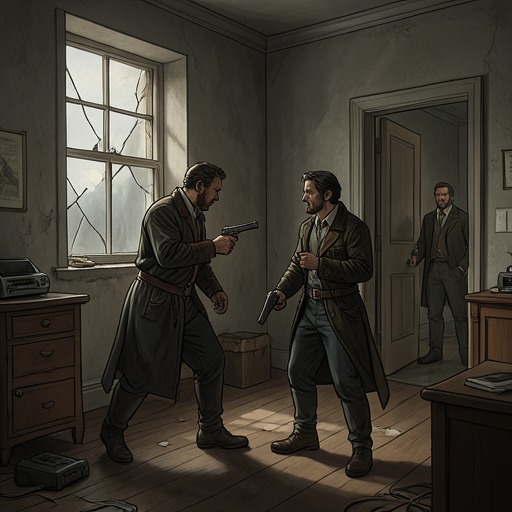
During the house’s collapse, the estrangement briefly yields to the older bond beneath it. Seeing the children in danger, Barbara pleads with Oliver to save them. Her fear brings back to him the softness he associates with the woman she once was. He repeats the appeal as their children and, looking at one another, senses again the connection from their meeting at Chatham. For a moment he wonders whether Barbara’s eyes are asking for another chance, but that hope remains his uncertain interpretation, not a reconciliation established between them.
When Barbara loses her balance and hangs over the unprotected drop, Oliver tells her to hold on and sends Eve and Josh out of the house so he can try to save her. Their shared response to the children’s peril momentarily restores a parental alliance, but the danger is the consequence of the household’s catastrophic condition, not a resolution of the marriage. Estrangement in the novel is therefore neither private nor contained: it reshapes the children’s sense of family, turns Ann into a confidante and intermediary, and leaves the spouses’ shared history present even at the point when their home and their lives are in immediate danger.